
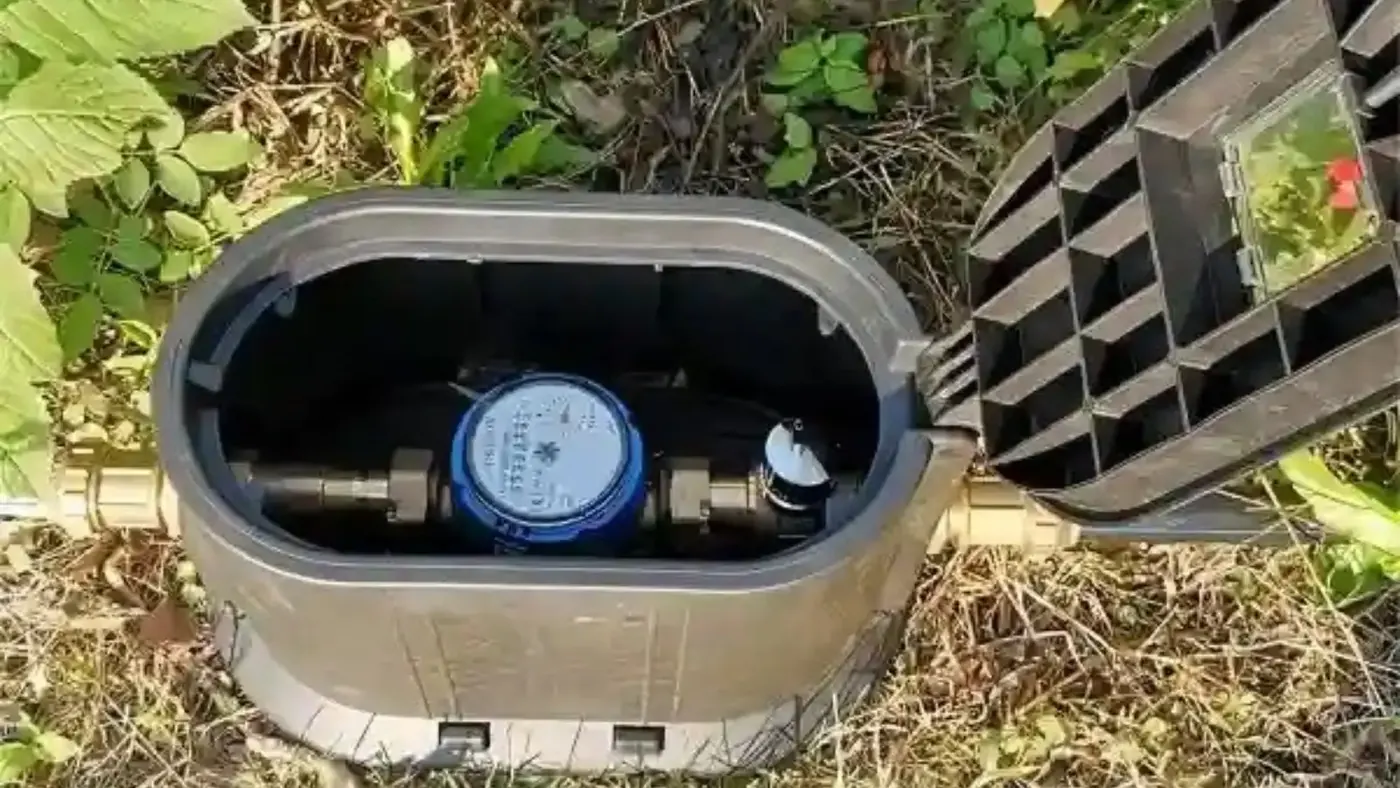
Why the meter is the first test.
A leak does not need to be visible to cost you money. A pinhole in a buried line or a toilet that runs silently can waste water for weeks. The meter counts every gallon that passes, so if it moves when nothing is on, something is leaking.
This test takes ten minutes, needs no tools and tells you whether the problem is worth a plumber visit.
How to find and read your meter.
Most meters sit in a box near the street or the property line, under a lid you can lift with a screwdriver. Be careful of insects and debris, and use a stick to clear the lid. Some homes have an indoor meter near the main shutoff.
The face shows a register that counts gallons or cubic feet, and often a small dial or triangle called the low-flow indicator. That small dial spins when even a tiny flow passes. It is the key to the test.
Meter spinning with every fixture off? Close the main valve and call. We find the leak.
Call (385) 488-1892.The two-step leak test.
Turn everything off.
Shut off all taps, the dishwasher, the washing machine and the ice maker, and do not flush a toilet.
.Check the low-flow indicator.
If the small dial or triangle is moving, water is flowing somewhere.
.Run the longer test.
Write down the reading, wait two hours without using water, then read it again. A change means a leak.
.Close the main valve and check again.
If the meter stops after you close the house main, the leak is inside the house. If it keeps moving, the leak is between the meter and the house.
.
That last step is what separates a yard leak from a house leak.
Where the leak is likely to be.
| Test result. | Likely location. | Next step. |
|---|---|---|
| Moves with main closed. | Meter box or street side connection. | Call the city water division. |
| Stops when main closed, moves when open. | House side line, fixtures, or heater. | Check toilets, then call for leak detection. |
| Moves only a little, steady. | Toilet flapper or dripping fixture. | Dye test in the tank. |
| Moves fast. | A larger leak or burst. | Close the main and call, see burst pipe repair. |
Toilets, the usual suspects.
More than any other fixture, toilets leak silently. Add a few drops of food coloring to the tank and wait fifteen minutes without flushing. If color appears in the bowl, the flapper is leaking. Replace it and test again.
Also check for dripping faucets, a running humidifier or water softener that regenerates too often, and an irrigation line that stays on. A sprinkler zone stuck on shows as meter movement even when the house is quiet.
Yard leaks and what to look for.
A service line leak shows signs outside the house.
- A patch of grass that stays green or soggy in dry weather.
- Water pooling over the path of the service line.
- A sudden drop in water pressure.
- The sound of water near the meter box.
- A wet basement wall where the line enters.
Before any dig, call Blue Stakes at 811. If you find the leak is on the service line, our water line repair page explains the repair.
After the repair: confirming the fix.
Once you replace a part or stop a leak, run the test again. Take a fresh reading, wait the same two hours with nothing running and read the meter again. A steady number confirms the fix.
If the meter still moves, the first leak may not be the only one, and a second source is more common than most people expect. Work through the toilets, the heater and the irrigation again before you call. Keep the readings, since they also help your insurer if damage followed the leak.
Reading the dial and the numbers.
The meter register counts total use, and some show gallons while others show cubic feet. One cubic foot is about seven and a half gallons. If you take a reading at bedtime and again in the morning with nothing running, even a small change tells you something. A zero change is what you want.
Photograph the meter at each check so you can compare later, since a photo beats memory. If your water bill arrives with a usage number, you can match it against your own readings and spot a month where use jumped for no reason.
Irrigation season complicates things. A sprinkler zone with a stuck valve or a broken head can look like a plumbing leak. Turn the irrigation controller off and close the irrigation supply before you run the test, so you are measuring the house only. Turn it back on afterward and check that every zone shuts off at the end of its cycle.
When to call a plumber.
Call when the meter moves with the main closed, when the leak is behind a wall, or when you cannot find the source. We use acoustic listening gear, thermal imaging and moisture meters to locate a leak without opening more wall than needed. Then we quote the repair separately so you can compare.
Who handles which pipe in Spanish Fork.
Which side of the meter you own depends on the city, so ask the water division which pipe is yours before you pay for a repair. If the leak is on the street side of the meter, report it to the city.
According to Spanish Fork City, a permit is required for plumbing work, and the building office can be reached at 801-804-4540. In Springville, the water division maintains meters and the culinary system, and Public Works is at (801) 491-2780. See our Springville page.. Mapleton, Salem and Payson are listed on our service areas page.
Meter leak questions from Spanish Fork homeowners.
It is the low-flow indicator. If it moves with every fixture off, water is leaving the system.
Usually yes, with a screwdriver or key, but watch for insects and do not touch the meter itself. If the lid is stuck, call the city.
A running toilet can waste a large amount over days. The meter and a dye test confirm it.
A bill that rises with no change in habits suggests a leak. Compare months and check the meter.
Yes for active flooding. Call (385) 488-1892 at any hour. Scheduled detection is available during the day.