The short answer on replacement timing.
Check the anode rod every two to three years, and replace it when the steel core shows through or the rod is coated with scale and thinner than a pencil. In many homes that means a new rod every three to five years. In very hard water, or with a softener running, the rod can be spent sooner, so Spanish Fork homeowners should lean toward the early end of that range.
A rod costs far less than a tank. Swapping it on schedule is the cheapest way to add years to a heater that otherwise looks fine.
What an anode rod does inside the tank.
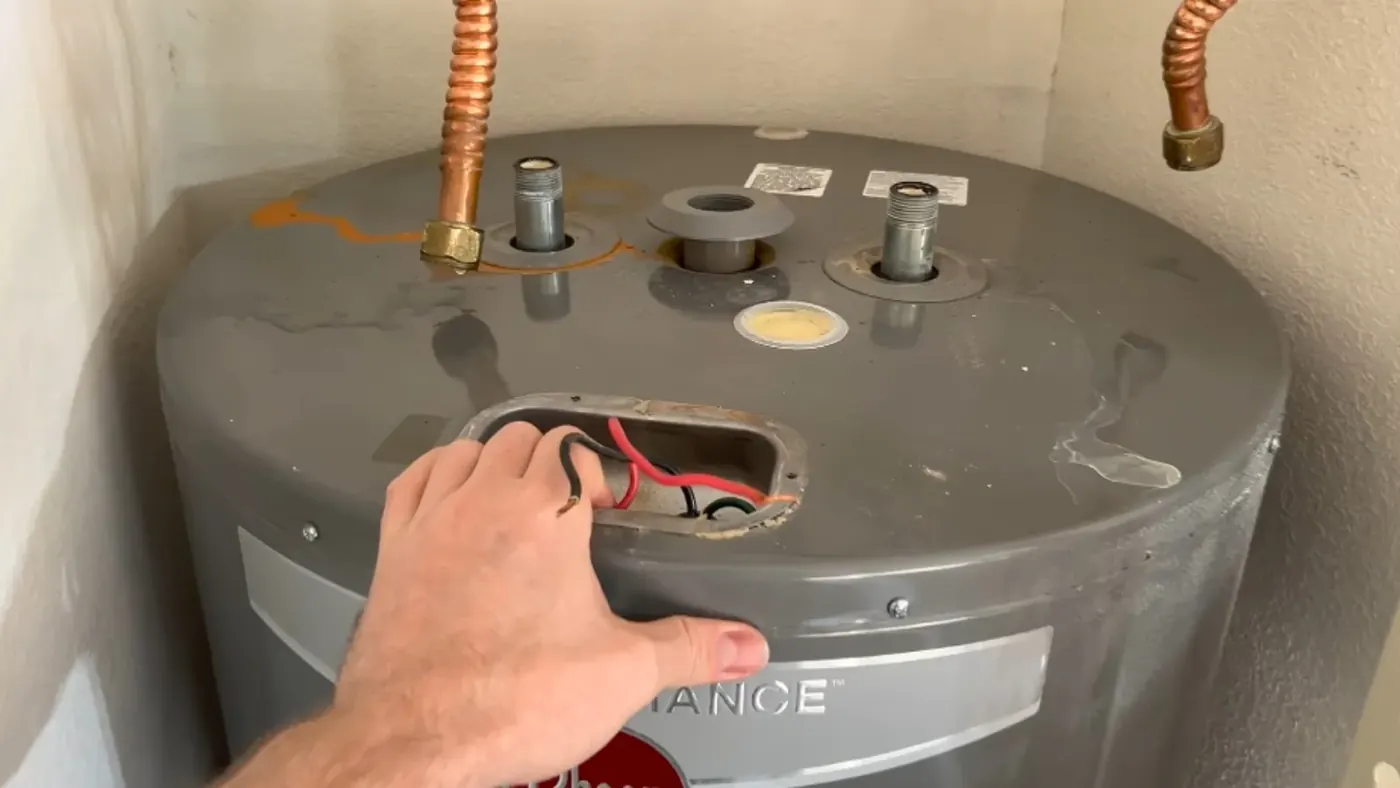
A tank heater has a steel shell with a glass lining. Tiny gaps in that lining expose steel to hot water. The anode rod is a metal core, usually magnesium or aluminum, that corrodes first because it is a more reactive metal. As long as the rod is there, the shell rusts slowly. When it is gone, the tank starts to rust through.
You cannot see this from outside. A tank can look clean and still have a rod that disappeared years ago, which is why the check matters more than the age of the unit.
Rusty hot water or a tank past its tenth year? Call and we will check the rod and the tank before they fail.
Call (385) 488-1892.Why hard water and softeners change the schedule.
According to Spanish Fork City, total hardness runs 231 to 349 mg/L, which is 13.4 to 20.24 grains per gallon. Hard water builds scale on the rod and on the bottom of the tank. A coated rod protects less, and scale on the tank bottom makes the burner run longer, which adds heat stress.
If you add a water softener, expect the rod to be consumed faster, since softened water is more aggressive toward the rod. That is not a reason to skip the softener. It is a reason to check the rod once a year for the first few years and see how it wears.
How to check a rod yourself.
Shut off the heat.
Turn the gas control to off or switch off the breaker for an electric unit.
.Close the cold supply.
Turn the cold water valve above the heater clockwise.
.Relieve pressure.
Open a hot faucet in the house and open the relief valve briefly, then drain a few gallons from the drain valve.
.Loosen the rod.
Use a socket on the hex head on top of the heater. It is often tight, so a breaker bar helps.
.Inspect.
Pull the rod out and look for bare steel, heavy scale, or a rod thinner than a pencil.
.
Many rods sit under a cover and need room above the tank. If the heater is in a closet with a low ceiling, a flexible segmented rod is the usual solution. If the rod will not turn, stop and call us before you strip the fitting.
Signs the rod is already gone.
A spent rod does not announce itself, but these signs often follow.
- Hot water that smells like rotten eggs.
- Rust-colored hot water at the tap.
- Popping or rumbling from the tank.
- A leak at the bottom of the tank.
- A heater more than eight years old that has never had a rod check.
Rotten egg smell can also come from bacteria reacting with the rod, and it sometimes clears with a flush and a new rod. Rust and a leak at the tank body mean the shell is failing, and replacement is the answer.
Segmented, flexible and powered rods.
If the heater sits under a low shelf, a segmented rod bends or comes in links so it can be fed in from above with little clearance. A powered rod is a different design. It uses a small electric current to protect the tank, so it does not get used up, and it suits water that is very hard or very soft. It needs an outlet nearby and costs more up front.
For most Spanish Fork homes, a standard magnesium or aluminum rod checked on schedule is enough. If your heater has already had trouble with odor or sediment, ask us about the alternatives on a visit.
Repair, replace or leave it alone.
| Finding. | What it means. | Next step. |
|---|---|---|
| Rod half gone, tank sound. | Protection is working. | Check again in a year. |
| Rod mostly bare steel. | Tank is now exposed. | Replace the rod now. |
| Rod gone and tank rusty. | Shell may already be damaged. | Flush and plan for replacement. |
| Rod stuck, no room above. | Cannot service safely. | Call a plumber for a segmented rod. |
Spanish Fork water and your tank.
Spanish Fork City publishes total hardness of 231 to 349 mg/L, so a Spanish Fork heater works in very hard water for its whole life. The city also says a permit is required for plumbing work, and the building office at 801-804-4540 can answer questions if you plan to replace the whole unit rather than the rod.
If your heater is in Springville, ask the Springville water division at (801) 491-2780 for its hardness figure, since the city has not posted one on its Public Works page. Our Springville page. explains who to call for city lines. Mapleton, Salem and Payson are listed on our service areas page.
Anode rod questions from Spanish Fork homeowners.
Many homeowners do. You need a socket, space above the tank and the patience to drain it. If the rod will not turn or the fitting is corroded, call a plumber rather than risk damaging the tank.
Often yes. Softened water is more aggressive toward the rod. Check it yearly for the first few years and set a schedule from what you see.
A powered rod uses a small electric current and does not get consumed in the same way. It suits very hard or very soft water, but it costs more and needs power at the heater. We can help you decide for your house.
Yes. Scale on the tank bottom and on elements shortens life, and a flush each year helps. Our water heater repair page explains the signs.
Planned rod changes are scheduled. If your tank is leaking, call (385) 488-1892 at any hour for emergency service.