Stop the overflow first.
Before you plunge, make sure the bowl will not overflow. Lift the tank lid and push the flapper down, or turn the shutoff valve behind the toilet clockwise. That stops the tank from refilling the bowl. Put towels on the floor around the base.
Do not flush again to see if it cleared. If the bowl is already close to the rim, the next flush goes onto the floor.
Plunging the right way.
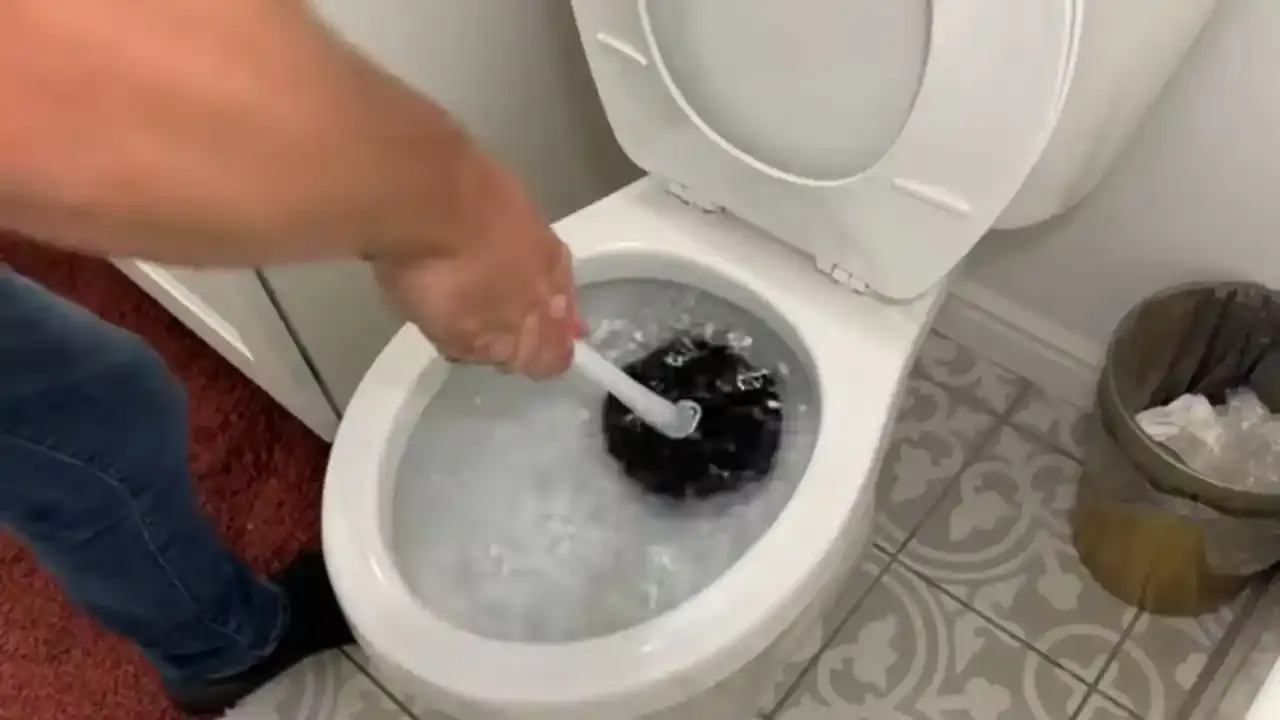
Use a flange plunger, which has a rubber lip that fits the drain opening. A flat cup plunger is for sinks. Put the plunger in so the flange seats in the opening, make sure there is enough water to cover the cup, and push down slowly first to push out air. Then pump with firm strokes for fifteen to twenty seconds.
Pull up sharply on the last stroke. If water drains with a gulp, the clog moved. Pour a bucket of water into the bowl to confirm it flows freely before you flush.
Toilet overflowing or gurgling with other drains? Close the supply valve and call. We answer 24/7.
Call (385) 488-1892.Hot water, dish soap and what to skip.
If the plunger does not clear it, add a good squirt of dish soap and a few quarts of hot tap water, not boiling, and wait ten minutes. Boiling water can crack porcelain. The soap lubricates a paper clog and the warm water softens it.
Skip chemical drain cleaners in a toilet. They sit in standing water, can damage the finish and leave caustic water for the next person who opens the line.
A note on kids, guests and rentals.
Clogs often follow a houseful of guests or a toilet used by small children, who flush toys and too much paper. Tell visitors that nothing but paper goes down. If you rent out a home, a short note on the bathroom wall about wipes saves a service call, since a wipe clog can travel past the toilet and block the main line.
When a clog happens in a rental, take a photo of the bowl and the floor before you plunge. It helps if there is a later damage dispute.
When to use a toilet auger.
A toilet auger is a short cable with a curved head that goes into the trap without scratching the bowl. Feed it in, crank the handle and push until you feel the clog, then pull the debris back or break it up. Flush a bucket of water to test.
If the auger goes through easily and the toilet still drains slowly, the clog is not in the toilet. It is farther down the line, and that is a drain cleaning call.
Signs it is not just the toilet.
| What you see. | What it means. | What to do. |
|---|---|---|
| Only this toilet clogs and clears. | A local clog or a weak flush. | Plunge or auger, check flush strength. |
| Toilet gurgles when the tub drains. | Partial main line blockage. | Stop using water and call. |
| Basement floor drain bubbles when you flush. | Main line backing up. | Emergency cleaning, see sewer line cleaning. |
| Toilet clogs again within days. | Scale in jets, a belly or roots. | Camera inspection. |
What a stubborn clog can be.
Toilets clog on paper and waste, but a stubborn one is often something else. Cotton swabs, dental floss, toys, hygiene products and wipes are the usual culprits, and they do not dissolve. A toilet auger can hook some of these. Others sit in the trap or just beyond it.
If you suspect an object went down, stop plunging, since pushing it deeper can lodge it in the drain bend. A plumber can pull the toilet, clear the trap and reset it with a new wax ring. That takes less time than most people expect.
Fill valve, flapper and a weak flush.
A toilet that clogs often may have a flush problem, not a clog problem. If the tank water level is low, or the flapper closes before the tank empties, the bowl does not get enough water to push waste through. Check the water line mark in the tank and adjust the fill valve to reach it.
In hard water, scale can also coat the flapper seat and keep it from sealing, which shows up as a toilet that runs after flushing. That is a cheap part and a quick fix.
Keeping it from happening again.
A few habits prevent most repeat clogs.
- Flush only toilet paper and human waste.
- Skip wipes, even the ones labeled flushable.
- Keep a small lidded trash can in each bathroom.
- Use a plunger at the first sign of a slow flush.
- Check the flapper and fill valve if the flush is weak.
A weak flush can come from scale in the rim jets. In hard water, a vinegar soak and a small mirror to find blocked jets can bring the flush back. Our toilet repair page covers that and flapper problems.
Spanish Fork City and what belongs in the toilet.
According to Spanish Fork City, bathroom wipes and feminine hygiene products are a leading cause of sewer backups, even when packaging says flushable. It also asks residents to keep fats, oils and grease out of drains. A toilet that clogs after wipes is a warning for the whole line.
The city says it repairs pipe from the main in the road to the property line, while owners clear their entire service line. If a clog keeps returning, our camera inspection shows which side the problem is on. For Springville homes, see our Springville page.. Our areas page shows which nearby towns share this dispatch.
Toilet clog questions from Spanish Fork homeowners.
No. Boiling water can crack the porcelain. Use hot tap water with dish soap and give it ten minutes.
Scale in the rim jets, a partial clog downstream, a belly in the line or roots can all cause repeat clogs. A camera shows which.
Spanish Fork City names wipes as a leading cause of sewer backups. They do not break down like paper, so keep them out of the toilet.
When the plunger and auger fail, when other drains gurgle, or when water is rising toward the floor. Call (385) 488-1892 at any hour.
It builds scale in the rim jets and trap, which weakens the flush. Cleaning the jets often restores it.