
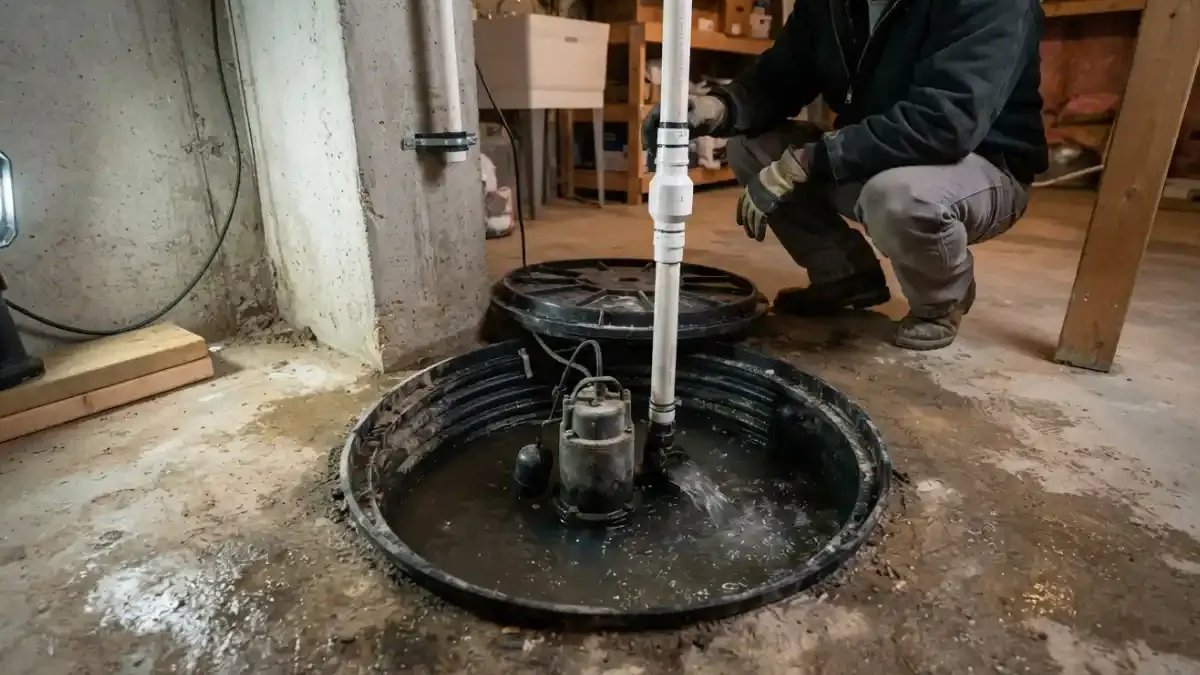
Start with power and the float.
A pump that does not run usually has a power or float problem. Check that it is plugged in, that the outlet has power and that the GFCI has not tripped. Then lift the float by hand. If the pump starts, the float is working and the pit simply was not full. If it does not, check the switch and the plug.
A float that is stuck against the pit wall, or tangled with the discharge pipe, is a very common fault. Clear the pit, reposition the pump so the float moves freely and test again.
Runs but does not move water.
A pump that hums or runs without moving water may have a clogged intake or a worn impeller. Unplug it, lift it out, and clean the screen at the bottom. Check the check valve above the pump for a stuck flapper, and the discharge line for ice or a kink.
Some pumps develop an air lock. A small weep hole in the discharge pipe lets air escape, and it is common to see a small spray from it when the pump runs. If the weep hole is clogged, clear it with a thin wire.
Pit filling and the pump is silent? Call now. We replace pumps and add battery backup.
Call (385) 488-1892.Runs nonstop or short cycles.
| Symptom. | Likely cause. | Fix. |
|---|---|---|
| Runs nonstop. | Stuck float, high water table or failed check valve. | Clean the float, replace the check valve. |
| Short cycling, turns on and off quickly. | Check valve leak sending water back, or float set too tight. | Replace the check valve, reset the float. |
| Runs loudly. | Worn bearings or a damaged impeller. | Replace the pump. |
| Does not turn off. | Switch failed closed. | Replace the switch or pump. |
| Trips breaker. | Motor failing or wiring fault. | Call for service. |
Check valve and discharge line.
The check valve keeps water in the discharge pipe from flowing back into the pit. When it fails, the pump has to move the same water again and again, which wears the motor and makes short cycles. A working valve clicks shut with a clear sound after each cycle.
The discharge pipe must send water away from the foundation. A line that ends too close to the house recycles water into the pit. A frozen or crushed line stops the pump even if it is healthy.
Backup power and battery.
Storms that cause flooding also cut power. A battery backup pump sits beside the main pump and takes over when it fails or when the power goes out. The battery needs testing yearly and replacing when it weakens. A backup alarm tells you if the primary fails.
For a finished basement, backup power is worth the cost. If you want details on sizing and testing, our sump pump page covers it.
A yearly test you can do in five minutes.
Check the pit.
Pull any debris from the pit and make sure the pump sits upright on a flat base.
.Fill it.
Pour several gallons of water into the pit until the float rises.
.Watch the cycle.
Make sure the pump starts, moves the water and shuts off without a delay.
.Listen to the check valve.
Confirm it clicks shut and the water does not fall back into the pit.
.
Do this twice a year and before the spring thaw. If the pump is slow to start or sounds rough, plan to replace it before the storm.
When water keeps coming back after rain.
If the pit fills fast and the pump runs often during storms, the pump is doing its job and the water source is the issue. Look at roof downspouts, window wells and grading. Extend downspouts several feet from the house and make sure the soil slopes away from the wall. Those fixes lower the load on the pump and on your basement.
Common mistakes that cause failures.
Plugging the pump into an extension cord, using a pump that is too small for the pit, and leaving a lid off the pit so debris falls in are common causes. So is a discharge line that empties near the foundation. Fix those, and many pumps last far longer. If the pit is an old crock or a plastic bucket, a proper basin and lid are worth the upgrade.
A float switch tethered too tightly can short cycle the pump, and a float that is too loose can let the pit overflow. The right range depends on your pit, and a plumber can set it in a few minutes.
Cheap pumps tend to fail sooner than better ones, especially where a house sits over a high water table. Ask about cast iron housings, stainless fasteners and a switch type that suits your pit size.
Repair or replace.
A new float switch or check valve is a modest repair. A pump with worn bearings, a burned motor or a cracked housing is better replaced, especially if it is ten years old or more. Replacement also lets you move to a better model and a bigger pit if the old one cycles too fast. If the pit floods in dry weather, the problem is not the pump. Look at basement waterproofing and irrigation next to the foundation.
Utah County freezes and discharge lines.
Utah County winters can freeze a discharge line that ends above ground and has water trapped in it. Slope the line so it drains, and consider a frost-proof discharge. The city says a permit is required for plumbing work, and the building office at 801-804-4540 can answer questions about changes to sump discharge. Do not connect a sump to the sanitary sewer unless local rules allow it.
According to Spanish Fork City, residents should keep fats, oils and grease out of drains, which is a reminder that the storm drain and the sanitary sewer are different systems. In Springville, Public Works at (801) 491-2780 maintains the storm drain pipelines. See our Springville page.. Mapleton, Salem and Payson are listed on our service areas page.
Sump pump questions from Spanish Fork homeowners.
A high water table, irrigation near the foundation or a failed check valve can all keep it running. Check the valve and the sprinklers.
Commonly around ten years, depending on use. Replace before it fails.
A weep hole that releases air and prevents an air lock. A small spray is normal.
For a finished basement or a pit that has flooded, yes.
Yes. Call (385) 488-1892 any hour during a failure.