
If you smell gas, stop here.
Gas smell.
Leave the house, do not use light switches or phones inside and call the gas utility from outside. Do not try to relight a pilot when you smell gas. Call us after the utility says the house is safe.
Everything else in this guide assumes there is no gas smell. The thermocouple is a safety device, and a gas appliance that behaves oddly deserves respect.
What a thermocouple does.
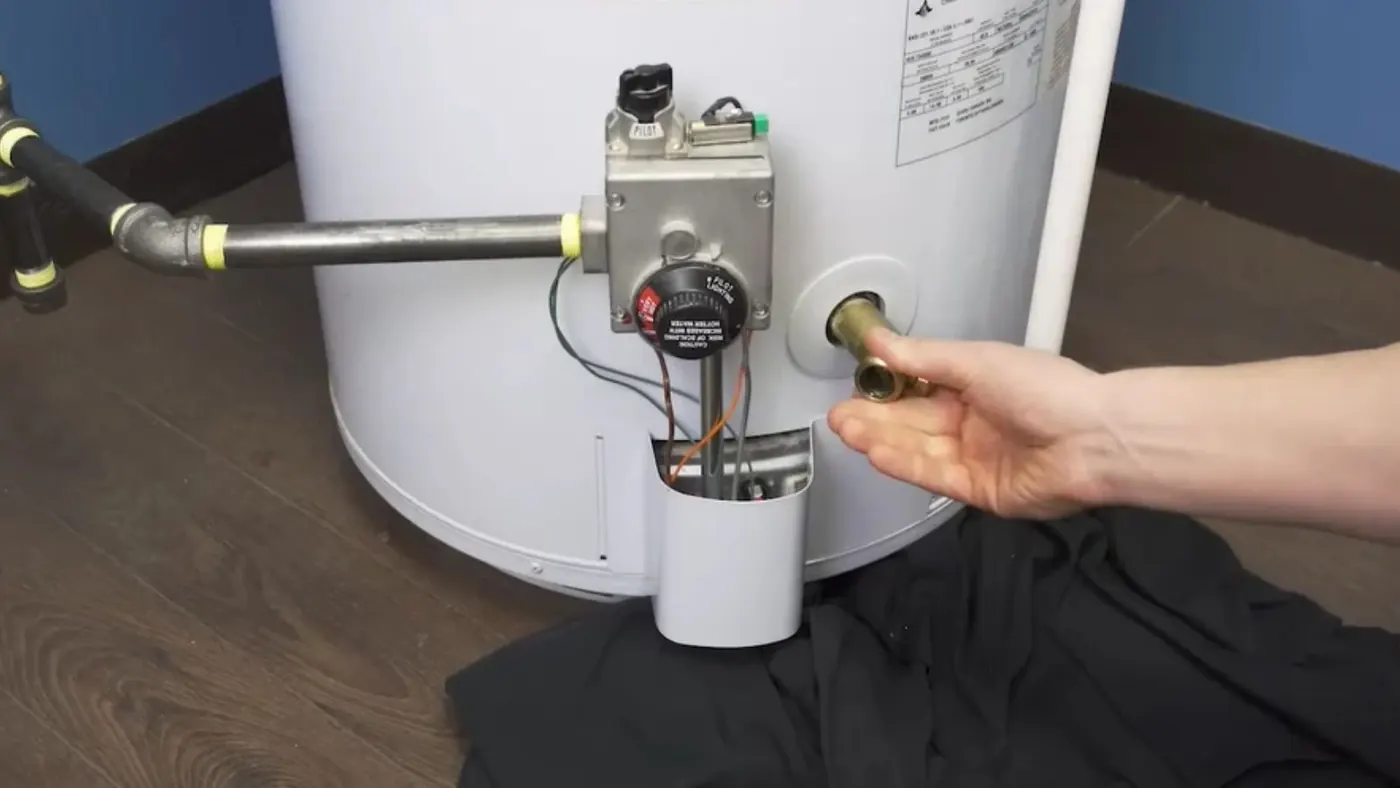
A thermocouple is a short metal probe that sits in the pilot flame. The heat produces a tiny electric current that holds open the gas valve to the pilot. If the flame goes out, the current stops, the valve closes and gas stops flowing. It is a simple fail-safe.
When a thermocouple weakens, it cannot generate enough current. The pilot lights while you hold the button down, then goes out when you let go. That is the classic sign.
Gas smell or a pilot that will not stay lit? If you smell gas, leave the house first, then call.
Call (385) 488-1892.Symptoms that point to the thermocouple.
| Symptom. | Likely cause. | Next step. |
|---|---|---|
| Pilot lights but goes out when button released. | Weak or dirty thermocouple. | Clean or replace it. |
| Pilot will not light at all. | No gas, clogged pilot orifice or failed igniter. | Check gas valve and pilot tube. |
| Pilot flame is yellow or weak. | Dirty pilot assembly or poor combustion air. | Call for service. |
| Pilot stays lit but no hot water. | Thermostat or gas control valve. | See water heater repair. |
| Pilot goes out in wind or drafts. | Venting or downdraft problem. | Have the vent inspected. |
How to test and clean it.
With the gas off, look at the thermocouple tip in the pilot flame area. If it is covered in soot or corrosion, a gentle cleaning with fine sandpaper or a cloth can restore the contact. Make sure the tip sits in the flame, and that the connection at the gas control is snug but not overtightened.
A multimeter can test the output in millivolts while the pilot is lit. A good unit generates roughly twenty five to thirty millivolts, and one that reads far below that is failing. If you are not sure how to do this, leave it to a plumber.
Replacing a thermocouple.
Shut off gas and cool the heater.
Turn the control knob to off and wait for the unit and pilot assembly to cool.
.Remove the access cover.
Open the burner compartment door and remove the cover plate.
.Unscrew the old part.
Loosen the nut at the gas control and the clip at the pilot assembly, and pull out the thermocouple.
.Fit the new one.
Seat it in the same position, tighten the nut finger-tight plus a quarter turn and set the tip in the flame.
.Relight and test.
Follow the lighting instructions on the heater label, and check that the pilot stays lit after you release the button.
.
Replacement thermocouples are sold by length and thread. Bring the old one to the store to match it. If the pilot still goes out, the problem is somewhere else.
When the thermocouple is not the problem.
A new thermocouple on a heater with a dirty pilot tube or a failing gas control valve will not help. Drafts, blocked vents and poor combustion air also blow out pilots. A heater with soot, scorch marks or a flame that rolls out of the burner compartment is unsafe, and should be shut off and checked.
Our plumbers check the vent draft, the burner flame and the gas control before they recommend a repair. If the tank is old or rusty, replacement may be the better use of money.
Safety checks to run any time you work on a gas heater.
A heater that has had trouble should get a quick safety review. These checks take a few minutes.
- Smell for gas before you start and after you finish.
- Check that the vent pipe is connected and the draft hood is in place.
- Look for soot, scorch marks or rust flakes near the burner.
- Make sure nothing is stored against the heater, such as paint, cleaners or paper.
- Confirm the relief valve discharge pipe is in place.
- Test any carbon monoxide alarm near the heater.
Carbon monoxide is the hazard that matters most with gas appliances. A working alarm on each floor is cheap insurance. If an alarm sounds, leave the house and call the gas utility from outside. Do not reset the heater and try again.
Soot on the burner or a flame that lifts off the burner can mean poor combustion. That is not a do-it-yourself fix. A plumber can clean the burner, check the vent draft and test the gas pressure.
Newer heaters and electronic ignition.
Many newer gas heaters have electronic ignition or a flame sensor instead of a standing pilot and a thermocouple. They have different parts, and the diagnosis is different. The model plate lists the type. If you are not sure which you have, send us a photo and we can tell you what to expect before a visit.
Gas appliances and permits in Spanish Fork.
According to Spanish Fork City, a permit is required for plumbing work. Replacing a thermocouple is a repair and usually does not need one, but replacing a water heater does, and the building office at 801-804-4540 can answer questions. Hard water adds sediment to the tank bottom, which makes the burner run longer and stresses the whole assembly.
Spanish Fork City reports 231 to 349 mg/L total hardness. A yearly flush helps the burner and the tank. If your home is in Springville, our Springville page. lists who to call for city utilities. If you live farther south, our service areas page covers Salem and Payson too.
Thermocouple questions from Spanish Fork homeowners.
If the pilot lights while you hold the button and goes out when you release it, the thermocouple is a prime suspect. A millivolt test confirms.
Many homeowners do, following the label instructions. If you smell gas, do not. Leave and call the gas utility from outside.
Many last several years. Soot, heat and a dirty pilot shorten the life.
Indirectly. Sediment on the tank bottom makes the burner run longer and adds heat stress. A yearly flush helps.
Yes if there is a leak or the unit is unsafe. Call (385) 488-1892 at any hour.