How to tell a pipe is frozen.
The first sign is usually a faucet that runs a trickle or not at all. If only the hot or the cold is affected, the freeze is on that line. If nothing runs anywhere, the main or the meter may be frozen. Frost on an exposed pipe, a bulge in a pipe or a section that is cold to the touch confirm it.
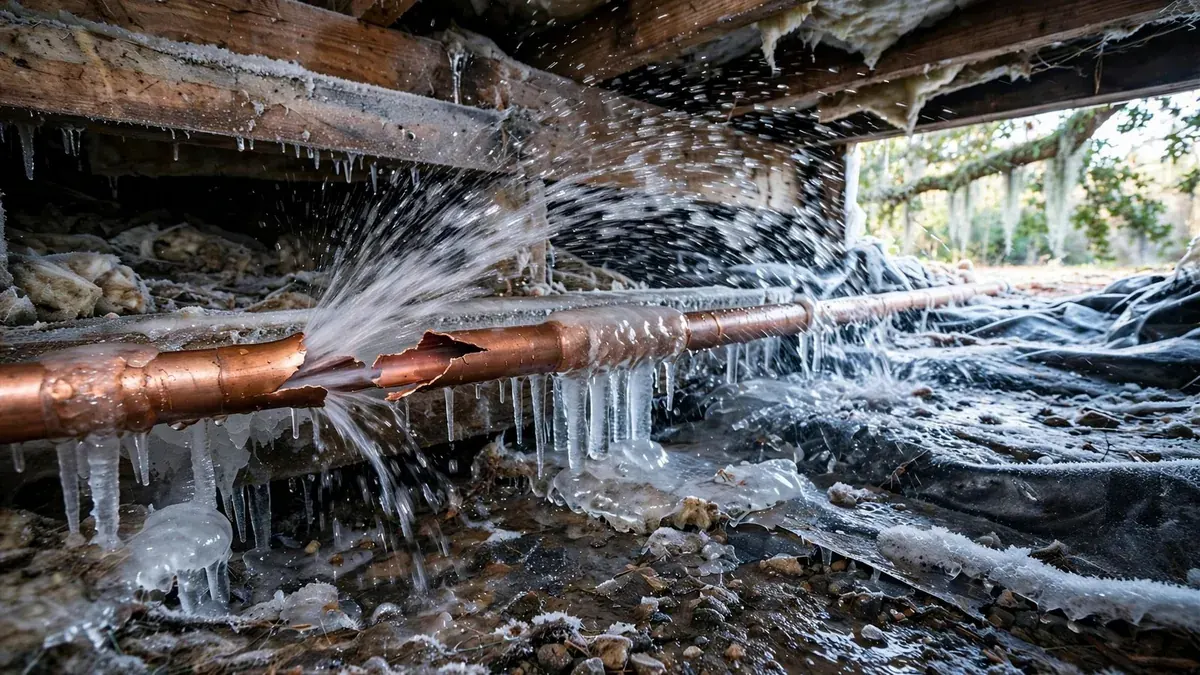
Do not wait. Water expands as it freezes, and pressure builds between the ice and the closed faucet. A pipe can split at the weakest point, and you only see the water when the ice thaws.
Thaw it safely.
Open the faucet.
Leave the faucet open so melting water and pressure have a place to go.
.Warm the pipe slowly.
Use a hair dryer, a heating pad or warm towels, starting nearest the faucet and moving toward the freeze.
.Keep going until flow returns.
Run water at full flow once the ice clears, then check along the pipe for leaks.
.Look for a split.
If you see a crack or water spraying, close the main valve at once and call.
.
Never use an open flame.
A torch, a heat gun that is too hot or a space heater left unattended can start a fire or damage the pipe. Plastic pipes can warp. Use gentle heat only.
Pipe split and water spraying? Close the main valve and call now.
Call (385) 488-1892.Which pipes freeze first.
| Location. | Why it freezes. | Fix. |
|---|---|---|
| Exterior wall under a sink. | Cold air behind the cabinet. | Open the cabinet door and add insulation. |
| Unheated garage or crawlspace. | No heat and drafts. | Insulate pipes and seal air leaks. |
| Attic and exposed basement lines. | Cold air and uninsulated pipe. | Insulation and heat tape. |
| Outdoor spigot and sprinkler lines. | Water left in the line. | Shut off and drain before the first freeze. |
Before the freeze.
These steps take an afternoon and prevent most freeze damage.
- Disconnect hoses and shut off outdoor spigots from inside.
- Drain sprinkler lines and the backflow device.
- Insulate pipes in garages, crawlspaces and attics.
- Seal gaps where cables or pipes pass through walls.
- Let a faucet on an exterior wall drip during a hard freeze.
- Know where your main shutoff is and test it each fall.
If you are leaving for a holiday, keep the heat on, set it no lower than a safe temperature, open cabinet doors on exterior walls and ask someone to check the house. A burst pipe in an empty house can run for days.
When it bursts anyway.
Close the main valve, open a low faucet to drain the lines, switch off the water heater and call. Keep away from standing water near outlets. We repair the break, and our burst pipe repair page explains what happens next. If the pipe has failed in several places, repiping may be worth pricing.
Photograph the damage and the broken pipe, and call your insurer promptly. Many policies cover a sudden burst and the damage that follows.
What a freeze does to different pipe materials.
Copper and galvanized steel split when ice expands, usually in a long crack along the pipe. PEX is flexible and often survives a freeze, though fittings can still fail. CPVC and PVC can crack and become brittle in the cold. A pipe that survived one freeze may be weaker, so check it after it thaws.
If you have a pipe in an exposed wall that freezes every winter, ask for a plan to reroute or insulate it. Heat tape helps, but it must be installed correctly and plugged into a protected outlet. Our plumbers can look at the run and suggest a fix. Sometimes a small change, such as moving a line a few inches inside the heated space, ends the problem for good.
Keep a small kit by the door in winter: a hair dryer, a flashlight, towels and a bucket. A frozen pipe is easier to handle when you do not have to search for supplies, and a few minutes of calm work often saves a burst.
Shutoffs you should know before the cold.
Find the main valve and turn it fully closed and open once each fall to make sure it works. Find the meter shutoff and the shutoff for each outdoor spigot. Label them with tape. When a pipe fails at two in the morning, you do not want to hunt for a valve with a flashlight.
If your main valve will not turn, or leaks around the handle, have it replaced before winter. A stuck valve is one of the most common reasons a small burst becomes a large one.
Leak detection after a thaw.
A pipe can crack and not leak until it thaws. If a pipe froze and then thawed, check the meter with everything off, as described in our leak detection page, and look for damp spots, stains and the sound of running water. A small crack can run for days before it shows.
Utah County winters and Spanish Fork homes.
Spanish Fork sits in Utah County, where winter cold snaps freeze exposed pipes and outdoor spigots. Many homes have basements, which are warmer than a crawlspace, but a garage wall or a cabinet on an exterior wall can still freeze. According to Spanish Fork City, a permit is required for plumbing work, so ask the building office at 801-804-4540 before you re-pipe a freeze-prone run.
Springville runs a pressurized irrigation system through its water division, and that is a reminder to drain irrigation lines before the freeze. See our Springville page., and call the city water division at (801) 491-2780 with questions about the meter. Neighbors in Mapleton or Payson can find their ZIP codes on our areas page.
Frozen pipe questions from Spanish Fork homeowners.
Yes. Keep it moving, start near the faucet and keep the faucet open. Never use an open flame.
If you see a crack or spraying water, close the main at once. If it is just frozen, leave the faucet open and thaw it gently.
Many policies cover sudden bursts and the damage that follows. Call your insurer and keep records.
Keep the heat on, open cabinet doors on exterior walls, drain outdoor lines and ask someone to check the house.
Yes. Call (385) 488-1892 any hour.