
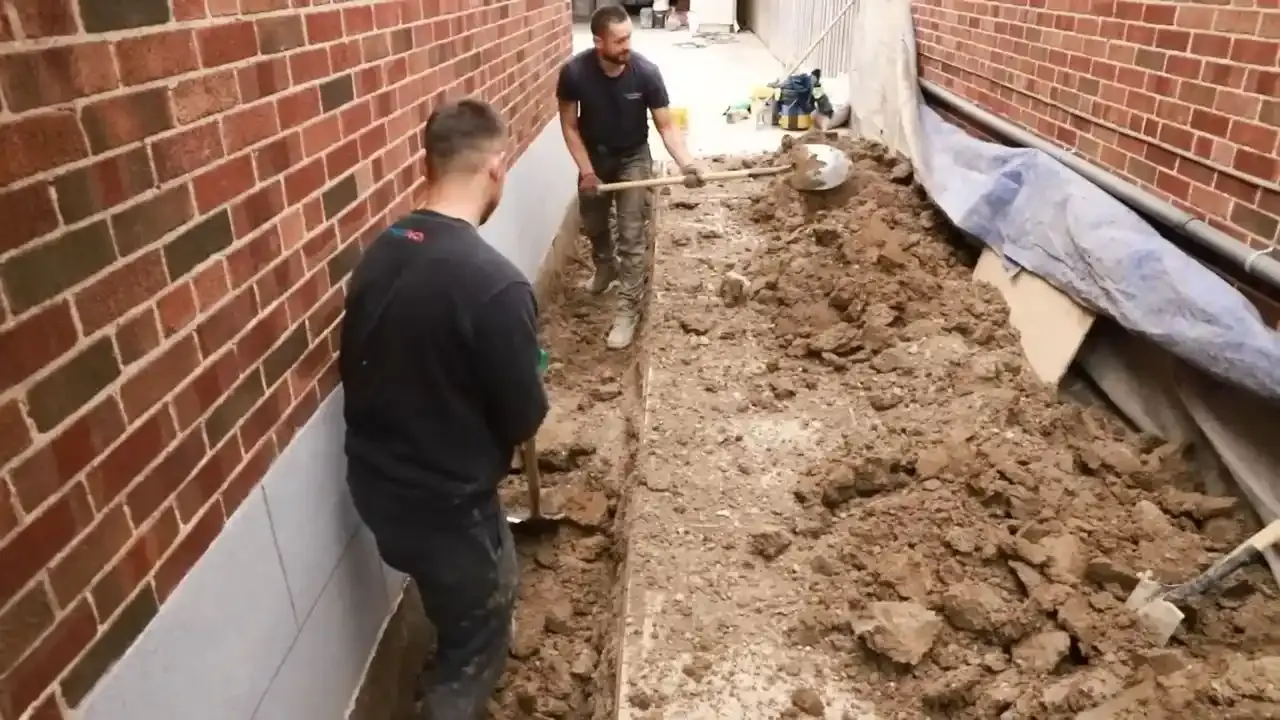
Why per-square-foot prices mislead.
Most waterproofing is priced by the linear foot of wall or floor edge that needs drainage, not by the area of the basement. A large open basement with water at one corner costs less than a small one with water at every wall. A quote that gives only a price per square foot of floor tells you little.
We do not post dollar figures on this site, because a number without a visit would be a guess. This guide explains what moves the price so you can compare any quote.
The cost drivers in order of impact.
| Driver. | Why it matters. | Lower-cost case. |
|---|---|---|
| Where the water comes from. | Grading and downspouts cost far less than excavation. | Surface water fixed outside. |
| Linear feet of wall affected. | Interior drains are priced by length. | Water at one wall or corner. |
| System type. | Interior drain, exterior membrane or crack injection. | A single seeping crack. |
| Sump pump and discharge. | Pit, pump, check valve and a discharge line. | Existing pit and discharge in good shape. |
| Finished space. | Walls and floors must be opened and restored. | Unfinished basement. |
| Permits and inspection. | Plumbing work needs a permit. | Simple repair, still check. |
Seepage after rain or irrigation? Call to schedule an evaluation and rule out a plumbing leak first.
Call (385) 488-1892.Rule out a plumbing leak first.
Many wet basements are a pipe problem. A meter that moves with every fixture off, a damp wall near a bathroom or a musty smell with no rain are signs. A leak test costs a fraction of waterproofing, and a fixed pipe may end the problem. Our leak detection page explains how we find it.
If the plumbing is tight, move on to the outside causes: downspouts, grading, window wells and sprinkler heads that spray the foundation.
Low-cost fixes worth trying first.
These cost far less than a drain system, and they often help.
- Extend downspouts several feet from the foundation.
- Regrade soil to slope away from the wall.
- Clear and drain window wells.
- Redirect sprinklers away from the foundation.
- Seal cracks that seep at a single point.
- Test the sump pump and discharge.
Give them a season. If water still enters at the wall and floor joint after the outside work, an interior drain and a pump are the usual next step, and our sump pump page covers that part.
Comparing quotes.
Ask each company to list the linear feet, the system type, the pump and the discharge route, the restoration of finished walls, the permit and the warranty terms. Ask what happens if the pump fails. A quote that lumps everything into one number is hard to compare. A written scope makes quotes comparable.
Be careful of a sales visit that pressures you to sign the same day, or a warranty that depends on a service plan you must pay for. Read the exclusions.
What a good evaluation includes.
Plumbing check.
We test the meter, fixtures and water heater to rule out a leak.
.Exterior review.
We look at grading, downspouts, window wells and irrigation.
.Interior review.
We look at the wall-floor joint, cracks, efflorescence and the sump pit.
.Written options.
You get the cheapest fix that should work, then the full systems, with the limits of each.
.
We would rather tell you an outside fix may be enough than sell a system you do not need. If the evaluation points to a system, we say where and why, and we show you the photos.
Warning signs of a larger structural problem.
Horizontal cracks, bowing walls, stair-step cracks in block and doors that stick in a basement can mean soil pressure on the wall, not just water. Those are structural issues and belong to a structural engineer. A waterproofing system will not fix a leaning wall. We tell you when we see those signs and suggest you get a structural opinion.
White powder on the wall, called efflorescence, is a mineral deposit left behind when water moves through block. It is a sign of past moisture, and not always of a current leak. Brush it off and see whether it comes back after the next rain.
Smell matters too. A damp, earthy smell in a closed basement points to moisture in the walls or the floor, and a sewer smell points to a dry trap or a vent problem. Pour water into any floor drain that has been dry for months, since a dry trap lets sewer gas up. That small step ends a surprising number of basement odor complaints.
Take photos of any stain or wet area with a coin or a tape measure for scale, and note the date and the weather. A short log of when water appears, after rain, after irrigation or after laundry, helps the evaluation and shows whether the water follows weather or plumbing. Share the log with any company that visits, since it lets them skip guesswork and quote the right fix.
Insurance and resale.
Many homeowner policies exclude groundwater seepage, and some cover sudden water from a failed pump only with an endorsement. Ask your carrier before you need it. For resale, a record of the work, the permit and the warranty helps a buyer feel confident, and photos of the system before the walls close add to it.
Irrigation season, permits and Spanish Fork basements.
Many Spanish Fork homes have basements, and lawns watered through summer keep soil wet against the foundation. A basement that seeps in July without rain is showing an irrigation problem more often than a drainage one. According to Spanish Fork City, a permit is required for plumbing work, which includes a sump pit and discharge line, and the building office at 801-804-4540 can answer questions.
Call Blue Stakes at 811 before any digging near the foundation. In Springville, Public Works at (801) 491-2780 can answer questions about storm drain connections. See our Springville page.. For the full list of towns we dispatch to, see our service areas page.
Waterproofing cost questions from Spanish Fork homeowners.
Price depends on wall length, system and finished space, not floor area. We quote after an evaluation so the number is real.
Often yes, with an interior drain and a sump pump. It depends on where the water enters.
Often not. Ask about groundwater and sump overflow endorsements.
Check the meter with fixtures off. Water that follows rain or irrigation is likely groundwater.
Yes for active flooding. Call (385) 488-1892 any hour.